














Paintless Dent Removal (PDR)
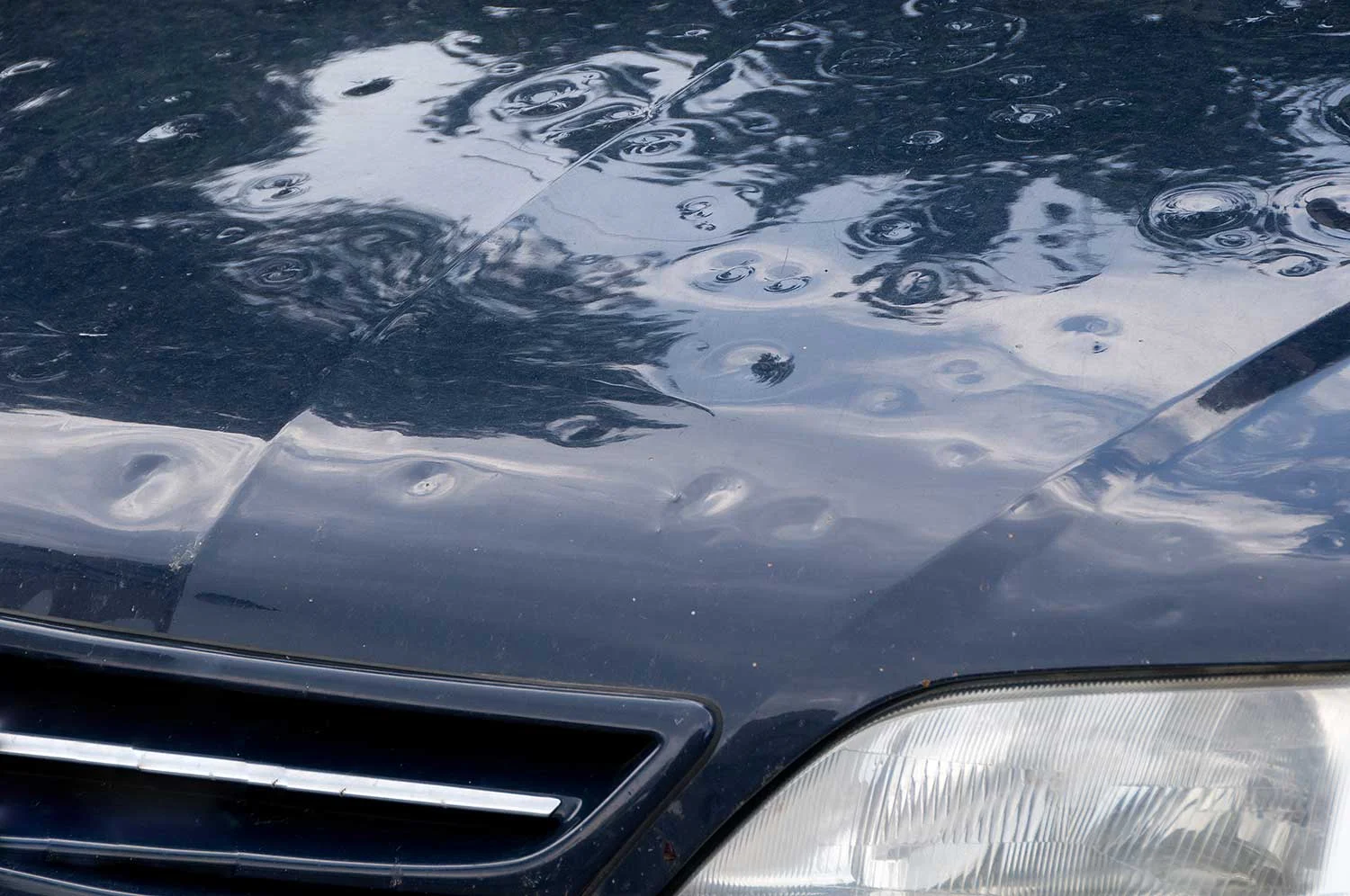
The most common practical use for PDR is the repair of hail damage, door dings, minor creases and minor plastic bumper indentations. Auto body repair technicians also utilize the PDR method to prepare a damaged panel for repainting, which is referred to as “push to paint” or “push for paint.”
We can repair a wide range of vehicle damage using PDR, however, PDR is not suitable for paint repair but can prepare the surface for repainting.
Limiting factors for a successful repair using PDR include: the flexibility of the paint and the amount of metal that has been stretched by the damage. In some instances, extremely sharp dents and creases may not be repairable – at least not without painting afterward.
Our PDR expert can tell you if this less expensive alternative dent and ding repair is an option for you.
Call us today at (210) 779-9000 for a free evaluation!
How Paintless Dent Removal Works
Sheet metal keeps a memory of its original shape, and PDR takes advantage of it. A technician reaches behind the dent with long steel rods and picks, then applies slow, controlled pressure to the back of the panel, raising the metal in many small pushes until the low spot sits level with the surface around it. No grinding, body filler, or paint is involved at any stage.
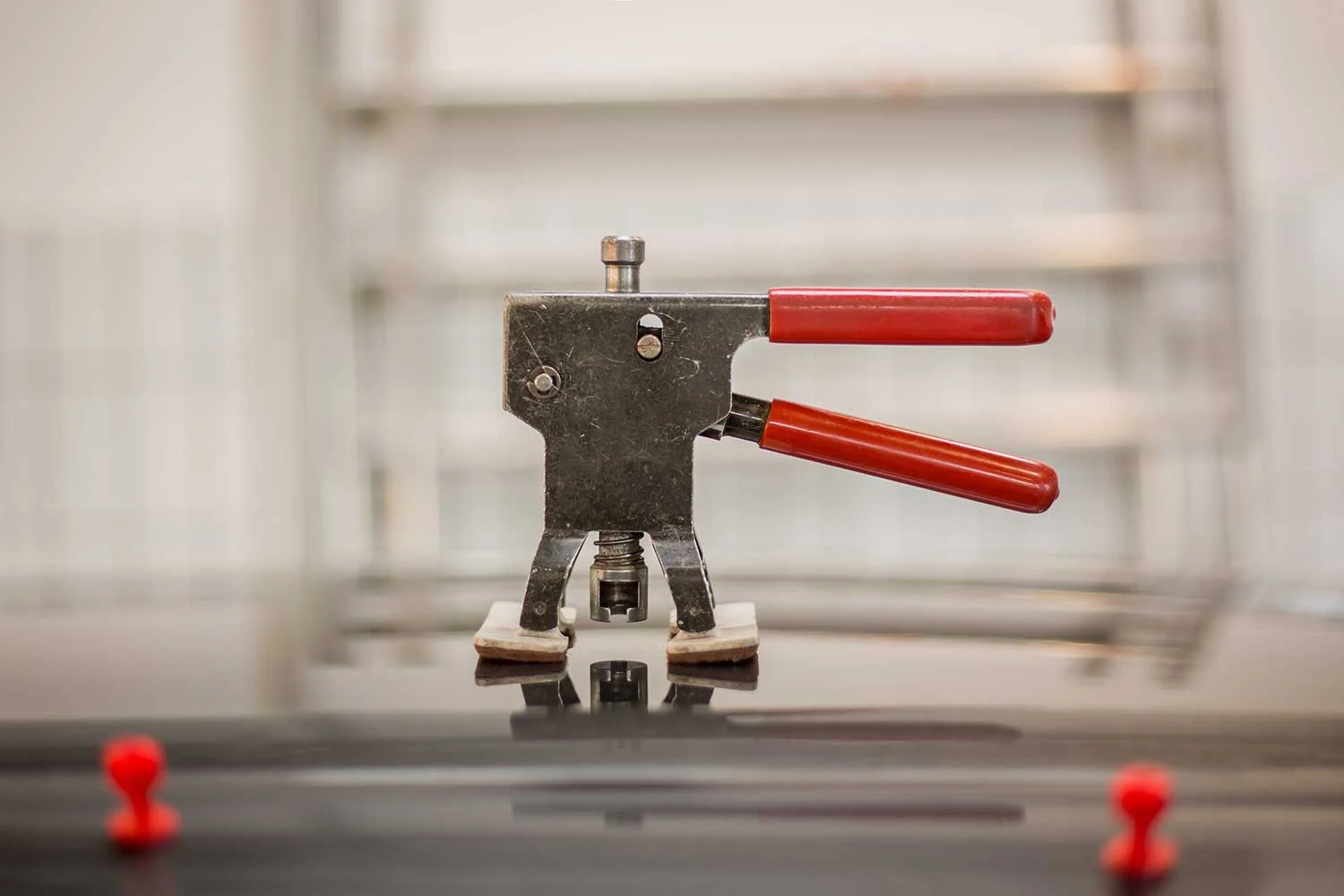
Where there's no way to reach the back of a panel, as with some roof rails and double-walled sections, technicians can glue pull tabs to the face of the dent and draw it out with a puller, then tap down any high spots. Through the whole repair the technician reads the panel with a line board or a PDR light, since the way reflected lines bend across the paint shows the shape of a dent far more precisely than the eye can alone.
What Makes a Dent a Good PDR Candidate
Size matters less than most people expect. A shallow dent the size of a dinner plate can sometimes come out cleanly, while a small, sharp dent may not, because a hard strike stretches the metal at the center of the dent. When our PDR technician evaluates a dent at Collision San Antonio, the questions are about shape, location, and the panel's history more than diameter:
- How deep and sharp the dent is. Round, soft-edged dents respond well, and sharp creases with a hard center are harder to level fully.
- Where it sits on the panel. Dents on a body line, at a panel edge, or over an inner brace take more skill, and some can't be fully leveled.
- Whether the technician can get to it. PDR needs a route to the back of the panel, or a surface that a glue tab will hold on.
- Whether the panel has been repaired before. Body filler or a thick repaint can crack when the metal underneath is pushed, which usually rules PDR out.
When a Dent Needs More Than PDR
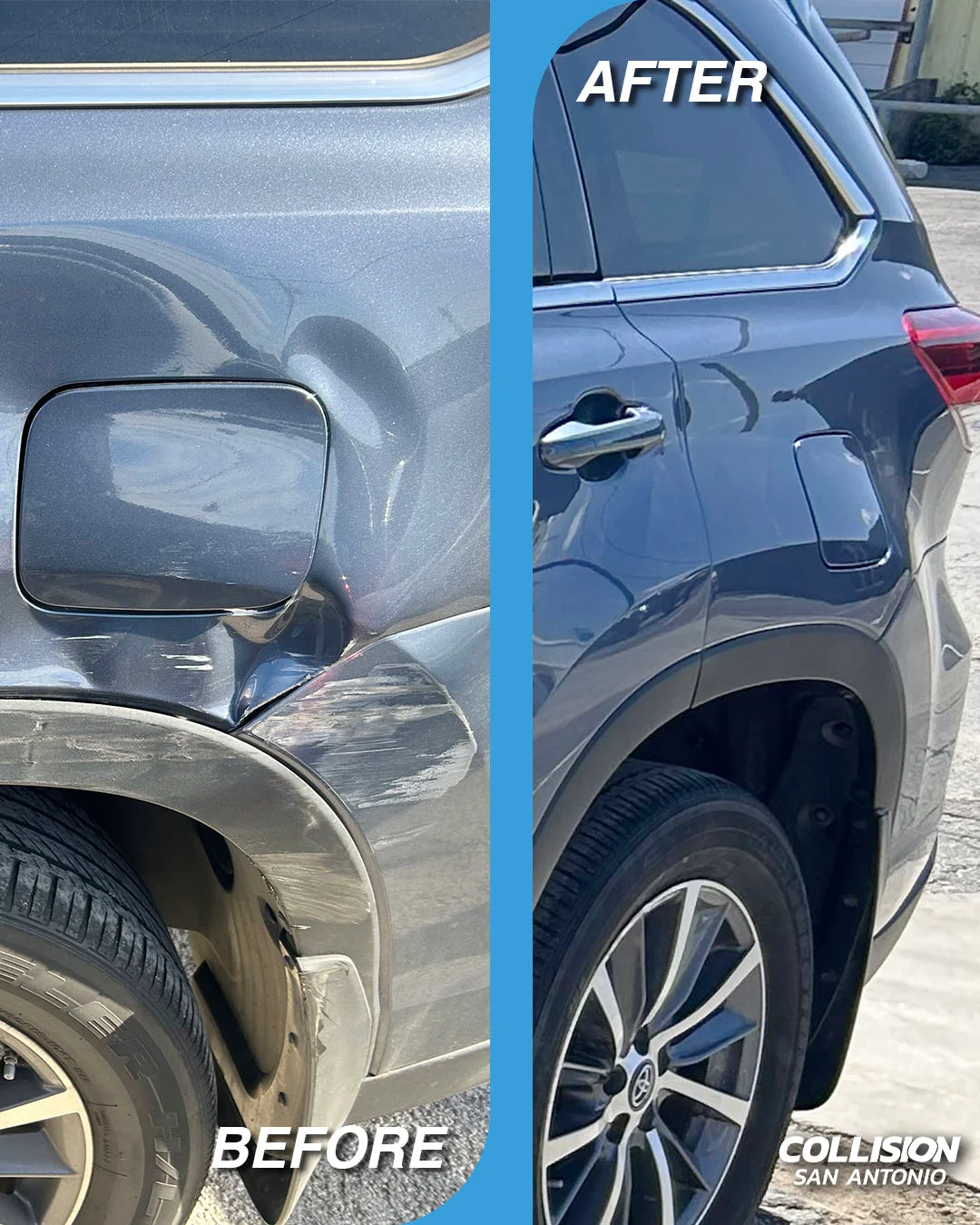
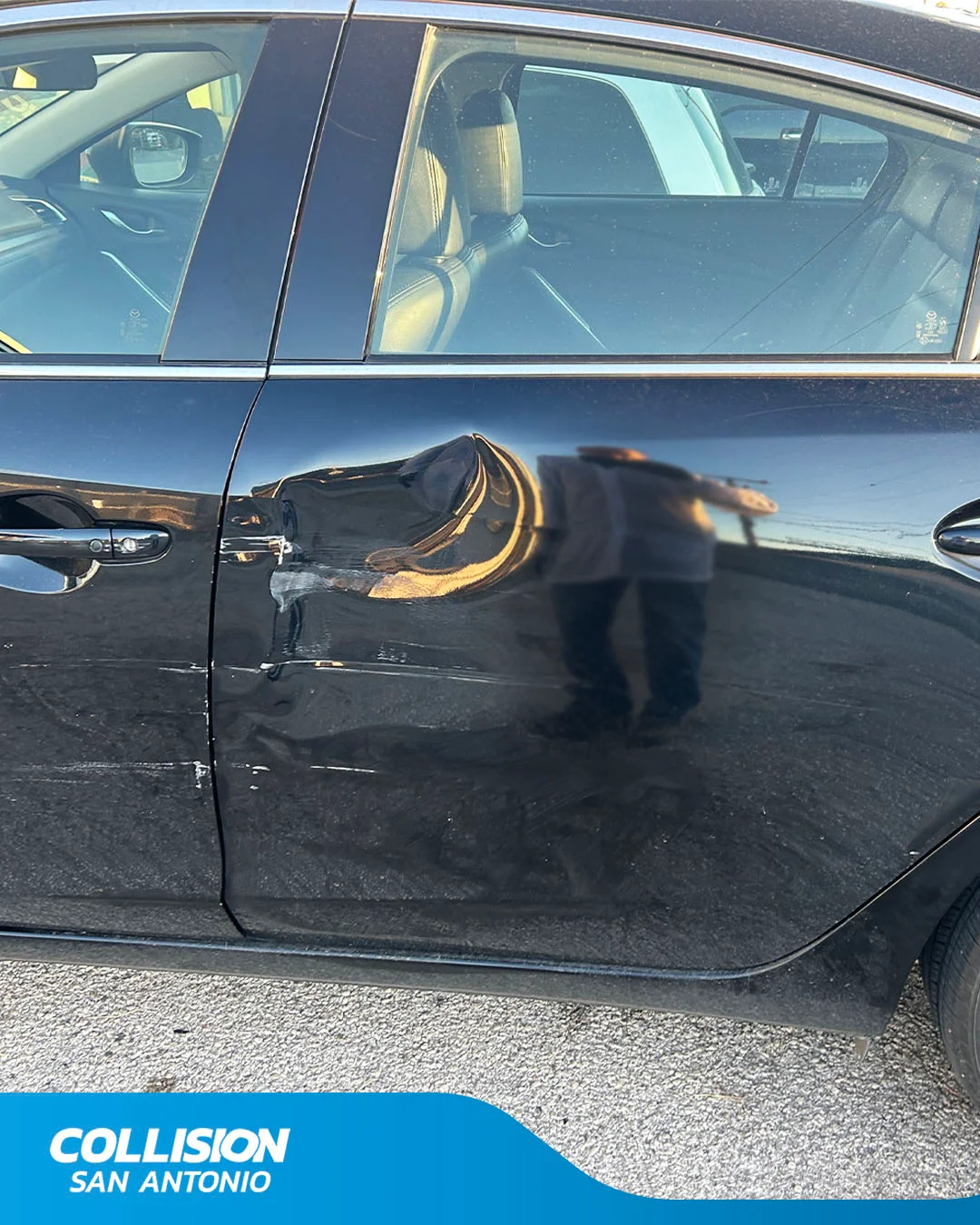
Some damage is beyond what paintless repair can do. If the paint over the dent is cracked or chipped, if the metal is torn or badly stretched, or if the panel was repaired with filler in the past, the fix calls for body work and refinishing through our scratch and dent repair service. Impacts that bend structural parts or knock panels out of alignment belong with full collision repair.
Plenty of dents fall somewhere in between. PDR tools can bring most of a damaged panel back into shape before a small area where the paint broke is refinished, which is the push to paint approach described above. Less filler goes into the panel that way, and the painted area stays as small as the damage allows.
Why PDR Is Worth Asking About First
When a dent qualifies, PDR leaves your factory paint on the car. That finish was applied and baked on at the assembly plant, and a car with no refinished panels is something used car buyers and trade-in appraisers check for. Keeping the original paint also keeps the vehicle's original paint warranty in place.
There's also less that can go wrong down the road. With no filler, nothing can shrink or crack under the paint later, and with no new paint there's no color to match and no repaint line to spot in the sun. Because the paint steps are skipped entirely, PDR is generally the faster and less expensive way to remove a dent.
What to Expect When You Bring In a Dent
Every PDR job starts with a close look at the dent under good light. Stop by Collision San Antonio for a free estimate and our PDR technician will tell you whether paintless repair will fully remove the dent, improve it, or isn't the right fit, and if it isn't, we'll explain the repair it does need and what that costs. We'll beat any written estimate, and if you'd like a ballpark before driving over, you can send photos of the dent from a few angles.
Small jobs can move quickly. We offer same day service for minor repairs, and the estimate is where we'll confirm whether your dent qualifies. Bigger jobs take longer: a car with hail damage can have dozens of dents across the roof, hood, and trunk, and those repairs generally take 2 to 3 days.
Paintless Dent Repair FAQs
Does paintless dent repair work on aluminum panels?
Yes, with more care. Aluminum hoods, fenders, and liftgates are common on newer trucks and EVs, and they can be repaired with PDR when the paint is intact. Aluminum has less memory than steel and stiffens as it's worked, so it's moved more slowly, and a few dents that would come out of steel can't be fully leveled in aluminum.
Will the dent come back after paintless dent repair?
No. Once the metal is worked back into shape it stays there, and Collision San Antonio backs its dent repair with a 100% satisfaction guarantee that dents won't come back.
Does insurance cover paintless dent repair?
Insurance pays for the damage, not a particular repair method, so PDR is covered whenever the cause of the dent is. Hail dents usually fall under comprehensive coverage, and a dent caused by another driver may be paid by their insurer. A single door ding often costs less than a typical deductible, so many drivers handle those as out-of-pocket repairs.
What affects the price of paintless dent removal?
The number of dents, how deep and sharp they are, where they sit on the panel, and how hard the back of the panel is to reach all affect the price. Aluminum panels and dents on body lines take more time than a soft dent in the middle of a steel door. Your estimate is free, and we'll beat any written estimate for the same work.
Can PDR fix a dent on a body line or near the edge of a panel?
Sometimes. Body lines and panel edges are folded or reinforced metal, which makes them harder to reach and harder to level, so the result depends on how sharp the dent is and whether the technician can get behind it. We'll tell you at the estimate whether PDR can fully remove it or will only improve it.
Can I fix a door ding myself with a suction cup or a dent puller kit?
A suction cup can pop out a large, soft dent on a flexible panel, but it rarely moves a small ding. Glue-pull kits used without experience can leave high spots or lift the paint, and once the paint comes off, a dent that PDR could have fixed now needs refinishing too.